
AI document intelligence for import trade
Every document read. Every deadline watched.Answer in seconds.
TradeDeck is the AI operations layer for steel and commodity importers. It reads your invoices, Bills of Lading, Goods Declarations and Letters of Credit on arrival, checks every figure against the credit it belongs to, tracks the dates that cost money, and answers questions about your operation in plain English.
- document types read
- 8document types read
- fields per document
- 40+fields per document
- reports out of the box
- 12reports out of the box
- alert channels
- 3alert channels
Steel leaves a mill in one country and clears customs in another. Everything in between is paperwork.
Pulling from the systems you already run on
- Fastmarkets
- NBP daily FX rates
- Customs portal
- Port schedules
- Satellite tracking
- WhatsApp and email
Document AI
AI that reads your trade documents. And knows when to stop.
Eight document types, read on arrival, cross-checked against the credit they belong to, and held back for a person whenever the page is not clear enough to be certain.
Seven fields off a scanned Bill of Lading. Six were written straight to the shipment.
Ask TradeDeck
Question your own records in plain English. The assistant writes its own queries, runs them, and hands back the working.
- Which Letters of Credit expire in the next 30 days with tonnage still undelivered?
- What did we pay in demurrage last quarter, by vessel?
- Show shipments where the delivered quantity differs from the LC by more than two percent.
- Read-only access, capped results, and every query returned with the answer.
Solutions
Every document. Every deadline. One system.
Eight parts of the import operation on one record. Each one replaces a spreadsheet, a phone call, or something somebody had to remember.
Document intelligence
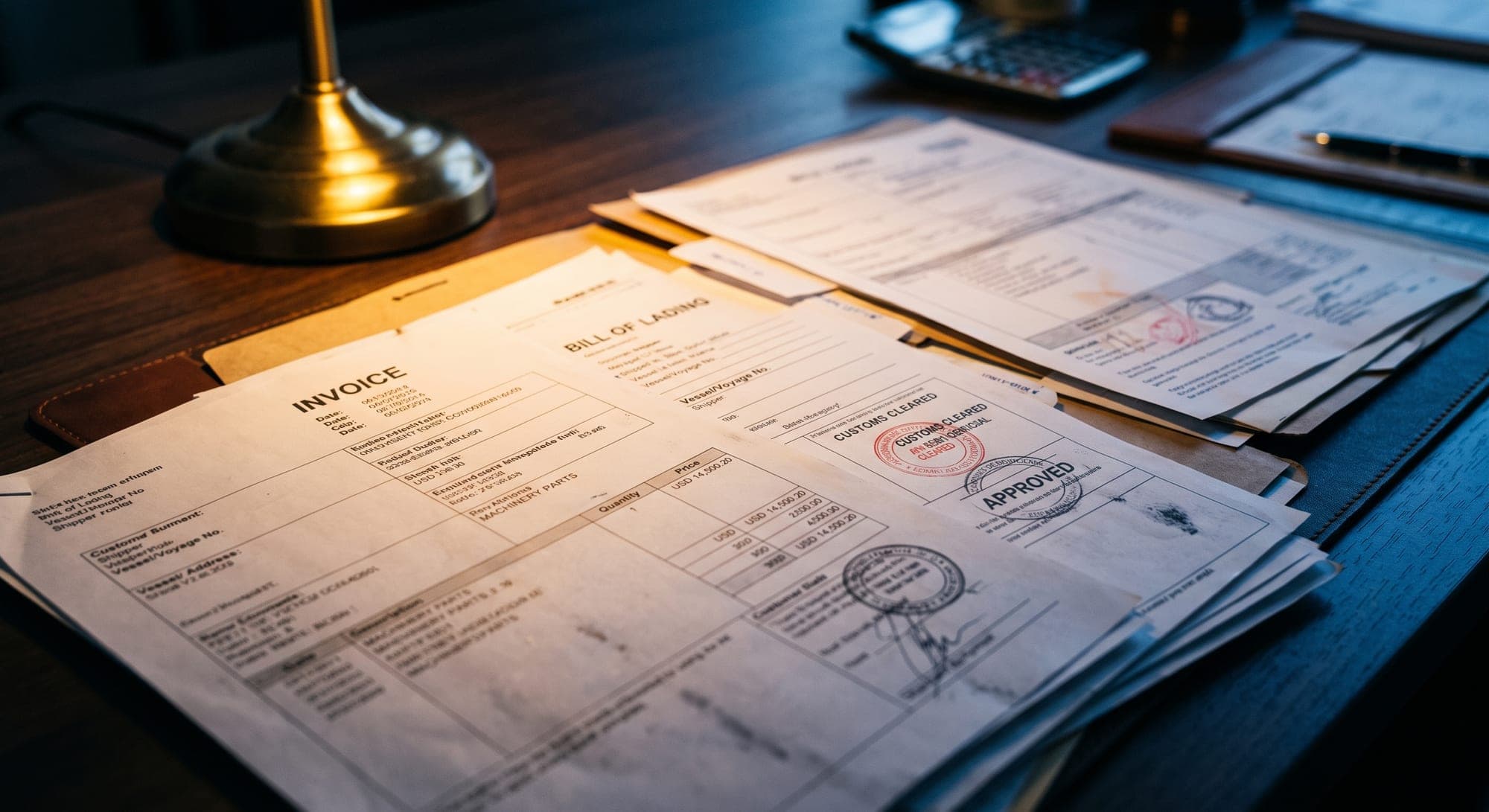
Reads every invoice, Bill of Lading, Goods Declaration and Letter of Credit the moment it arrives, scanned or digital, in any supplier's layout. Nobody retypes a document again.
Letter of Credit management
Every credit, amendment and expiry in one place, checked against your documents before they reach the bank. Discrepancies get caught by you, not by the issuing bank.
Shipment & vessel tracking
Follow cargo from contract to delivery, with arrival times taken from the port itself. No more chasing an agent for an ETA that's already changed.
Demurrage & detention
Free-day counters start at berthing, per Bill of Lading, and warn the desk that owns the shipment before the clock runs out. Days you know about are days you don't pay for.
LME pricing & FX
Your metal pricing formulas applied against live LME data and the National Bank of Pakistan daily ratesheet, the same way every time, with the working shown. No more pricing sheet with one wrong cell.
Duty & SRO quota
Consumption tracked against every quota, with a warning before the validity window closes. You stop paying full duty on tonnage that still had relief on it.
Banking & exposure
Bank limits, headroom and open LC exposure, current to the minute. Finance stops asking operations for a number that's three days old.
Reporting & alerts
Twelve reports out of the box plus a builder for the rest, and alerts on WhatsApp, email and dashboard. The month-end report stops taking a day.




The real problem
Nothing here is broken. That's exactly why it costs so much.
Every importer already has a process. It is held together by attachments, spreadsheets and a group chat, and it works right up until the day it doesn't.
“Which shipments arriving this month are missing documents?”
If that takes more than a few seconds to answer, the paperwork is running the operation instead of the other way round.
- 01
The documents arrive
Invoice, packing list, Bill of Lading, across three threads and a dozen attachments.
- 02
Someone types them out
Fifty-odd columns per shipment, by hand, from a scanned PDF.
- 03
Pricing happens elsewhere
Metal formulas, currency, freight. One wrong cell and the invoice goes out wrong.
- 04
Deadlines live in people's heads
Filing windows, LC expiry, free days, quota validity. Remembered, not tracked.
- 05
A date slips
Demurrage starts running. A quota expires with tonnage on it. Nobody saw it coming.
None of this is anyone's fault. It is what happens when the system of record is a spreadsheet on one laptop. The cost never shows up as a line item. It shows up as a demurrage invoice.
Where the money goes
Every import file leaks money
Not in the big decisions. In the small dates nobody was watching.
- Demurrage & detention
Free days don't wait for your paperwork.
The vessel berths and the clock starts, whether or not your paperwork has caught up. TradeDeck counts from berthing and warns the desk before the free days run out.
How it works - LC discrepancies
The bank doesn't return your documents. It returns your payment.
One mismatched line and the presentation comes back with a fee attached, payment pushed out weeks. TradeDeck checks every field against the credit before anything is filed.
How it works - Mispriced invoices
One wrong quotation period and the margin is gone before the cargo lands.
A pricing sheet built by hand, under time pressure, is one wrong cell from an invoice that's wrong. TradeDeck applies your formula against live LME and NBP data the same way every time.
How it works - Lapsed duty exemption
Quota you already paid for, expiring with tonnage still on it.
Miss a quota's validity window and you pay full duty on cargo that was entitled to relief. TradeDeck tracks consumption against every quota and warns before it closes.
How it works
None of these appear as a line item. They appear as a landed cost that came in higher than the sheet said it would.
One record
Six documents, six systems. One chain.
Every document that arrives attaches to the link it belongs to, and every link knows about the others. It walks itself, and waits while you read.
What lands here
- Supplier contract
- Pricing addendum
What TradeDeck checks
- Pricing basis and quotation period stored against the shipment
- Premium and payment terms captured for later invoice checking
A commercial invoice lands in your inbox.
A quantity on the invoice is checked against the credit that authorised it and the Bill of Lading that carried it, because all three are on the same record. That is the whole reason a discrepancy can be caught before the bank sees it.
Alerts
Your team hears about it on WhatsApp, before it costs anything.
TradeDeck re-checks every Letter of Credit, shipment, Bill of Lading and Goods Declaration on a schedule. The moment one of them crosses a line, the message lands in the group your operations team already has open. Pick a situation below and watch it happen.
What makes TradeDeck speak up
Every alert goes out on
One event raises one message (never the same warning twenty times) and it carries the reference number, so whoever reads it can act on it straight away.
Nobody has to be logged in for the warning to arrive.
Questions
The things people ask before they say yes.
If yours is not here, it is probably the most useful twenty minutes we could spend together.
Yes. There are no per-supplier templates to build and none to maintain. TradeDeck reads scanned and digital documents in whatever layout arrives, including stamped, skewed and annotated pages, because harder pages escalate to a stronger model rather than failing. The honest test is to bring the document your team currently retypes by hand and watch what comes out.
Next step
Bring one shipment. We'll show you the rest.
Twenty minutes, your own documents, no preparation needed. You will see exactly what comes out of them and exactly what gets held back for a person.
- No integration project to start first
- No data migration before you can see it work
- Bring your own documents to the call